StatusPre-seed · Prototype stage
ModalityElectrical Impedance Tomography
Radiation0 mSv — zero exposure
Scan time< 60 seconds

Tissue imaging.
Sideline-ready.

EIT-tek is building a portable, non-invasive imaging device that uses Electrical Impedance Tomography to assess musculoskeletal health. An electrode sleeve captures tissue conductivity and renders a visual impedance map on a tablet — giving trainers actionable insight in under a minute, with zero radiation.
Know your Body.
Own your Recovery.
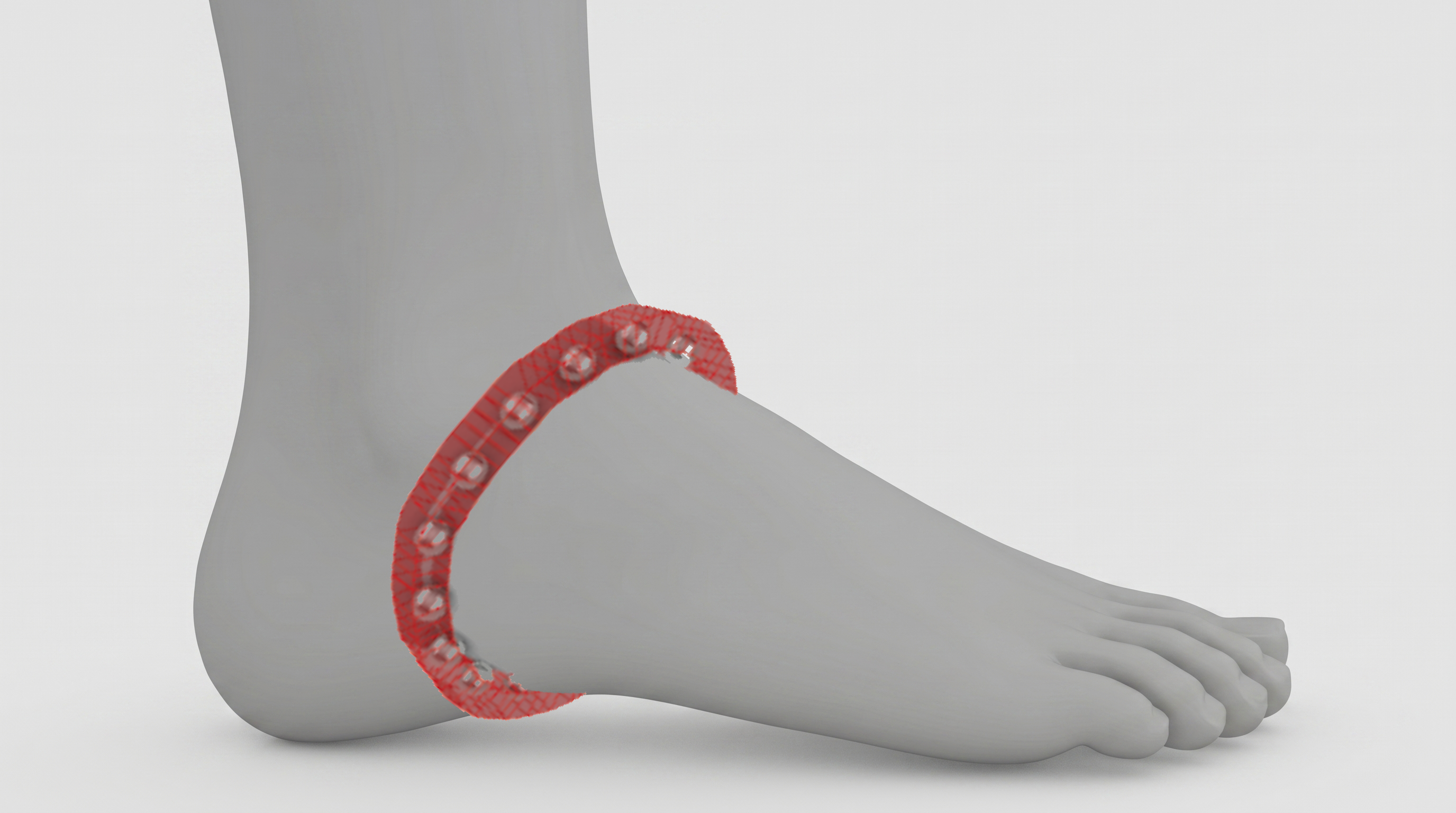
Fig. 01 — 16-channel electrode ring
PortableNon-invasiveZero radiationReal-timeSideline-deployableAffordableNASA-derived signal processing PortableNon-invasiveZero radiationReal-timeSideline-deployableAffordableNASA-derived signal processing
001 / The problem

A monitoring gap at field-level.

High-quality musculoskeletal imaging stays locked in hospitals. Trainers make return-to-play calls without the data to back them.

01
3.5M+

Youth athletes suffer sports injuries in the U.S. every year.

02
24%

Of athletes retire early from sport due to injury-related causes.

03
3–5×

Higher injury prevalence vs. the general population.

04
$$$

The cost of imaging blocks ongoing monitoring of musculoskeletal health.

002 / The solution

A wearable sleeve. A tablet. A map.
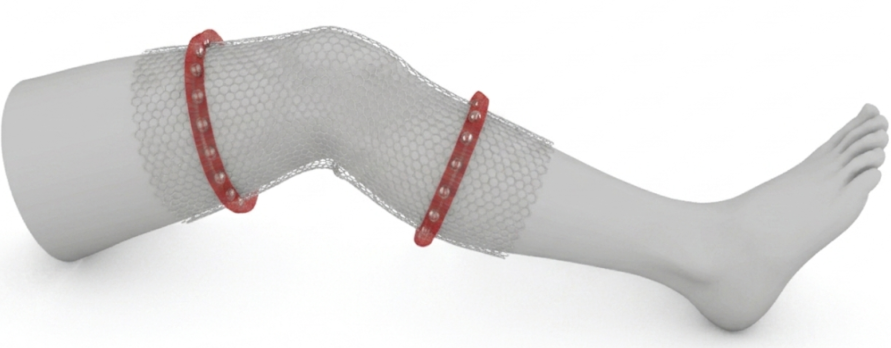
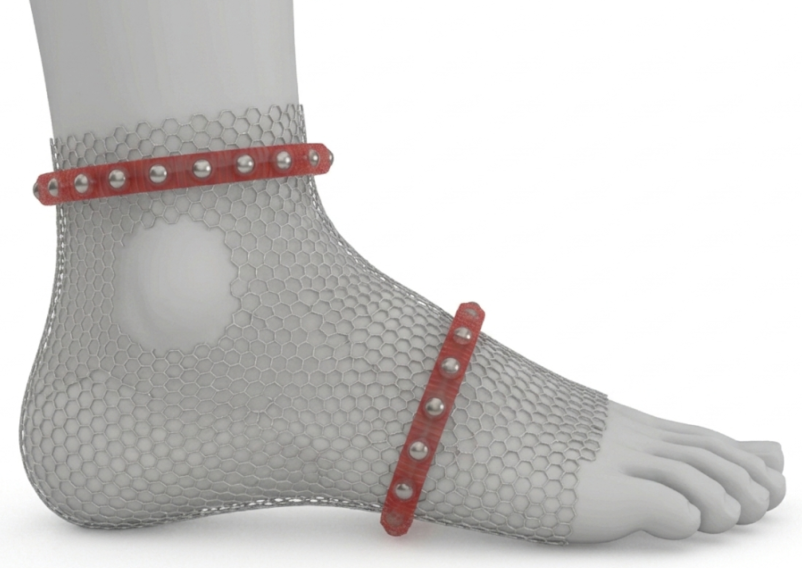
Moving electrode configuration Stationary electrode configuration 1 Stationary electrode configuration 2
How it works

Musculoskeletal assessment —
fast, reliable, accessible.

EIT-tek detects and proactively prevents injury by comparing user data across time points, surfacing insights previously only available with expensive hospital-grade equipment.

  • 01

    Wearable electrode sleeve

    Slips onto the injury hot-spot — elbow, knee, ankle, wrist, forearm, hamstring — and injects a safe, low-amplitude current across the tissue volume.

  • 02

    Real-time impedance map

    Conductivity data is reconstructed into a 2D / 3D impedance map rendered live on a tablet at the sideline.

  • 03

    Timepoint comparison

    Pre-season vs. playoffs: compare the same athlete across sessions to flag subclinical changes before they become injuries.

003 / The hardware

Two configurations.
One platform.

A shared signal chain powers both scanning modes, so the software stack stays the same whether you're building a 2D stack or a volumetric reconstruction.

Mode A · Single moving ring

Slide, stack, reconstruct.

The user moves a single electrode band across the limb to generate 2D slices that stack into a 3D image — similar to a CT scan.

Mode B · Multi-ring array

Capture the volume at once.

Multiple electrode rings capture the full scan without repositioning. Cross-plane current injection creates diagonal paths through the tissue volume for true 3D reconstruction.

ElbowKneeAnkleWristForearmHamstring
004 / Technology edge

Signal
from noise.

EIT-tek integrates the Hilbert-Huang Transform, a NASA-developed signal processing algorithm originally built for space-mission data analysis. HHT delivers superior noise filtering for nonlinear biomedical signals — clearer, more accurate imaging from low-cost hardware.

NASA HHT licensing Nonlinear signal decomposition Adaptive denoising
RAW · V(t)
● HHT · FILTERED
0.00s
1.00s
005 / Market

A gap
no one fills.

Sports medicine · 2034
$11.5B

Global sports medicine market projection. CAGR ~5.8%.

Orthopedic imaging · 2032
$6.4B

Orthopedic imaging market expected to nearly double from today.

Our target
Intersection

Affordable, portable musculoskeletal imaging — unfilled by current products.

006 / Roadmap

Concept → clearance → field.

Four phases from provisional patent to FDA 510(k) clearance and athletic-department integration.

S1 Now
Foundations
  • Prototype hardware assembly
  • Build 2D circular mesh in pyEIT
  • Hilbert-Huang on example data
  • Provisional patent filed
S2 Next
Validation
  • Phantom validation testing
  • Create mock electrode sleeves
  • Test HHT on phantom setup
  • NASA Startup license acquisition
S3 Pilot
Human testing
  • Custom software design + build
  • Pilot human testing
  • HHT on human data
S4 Market
Launch
  • Seek FDA 510(k) clearance
  • Seed funding round
  • Athletic-dept integration
  • Enter market

007 / The ask
$60K Pre-seed · Concept → validated prototype

We're raising $60,000 in pre-seed funding to complete prototype development, secure NASA HHT licensing, and launch pilot testing with university athletic programs. This takes EIT-tek from concept to a validated prototype with human pilot data — positioning us to pursue FDA 510(k) clearance and a larger seed round.

Request the deck See progress

Trainer, team physician, or investor? Let's talk.

Get in touch